In a nutshell
- 🔁 Swap your homescreen photo and pair it with a breath ritual to build a cue–response loop that nudges attentional priming and shifts the body toward a calmer, parasympathetic state.
- 🖼️ Choose images signalling safety—nature scenes, gentle fractals, soft textures, cool tones—while minimising distractions (badges, clutter); give the wallpaper space with a minimalist layout.
- 🧠 Train the association with a simple script: a 4-second inhale, 6-second exhale, plus a one-word label (affect labelling) and an implementation intention—“When I unlock, I exhale and soften my jaw.”
- ⏱️ Use the 30-second routine: pause, fix your gaze, 4–6 breath, silent label; refresh images every 2–3 weeks to beat habituation and optionally track a 1–5 calm score.
- ⚠️ Know the limits: it’s a stabiliser, not a cure; mind privacy and social context; set quickly (iPhone: Settings > Wallpaper; Android: Wallpaper & style); consistency beats motivation.
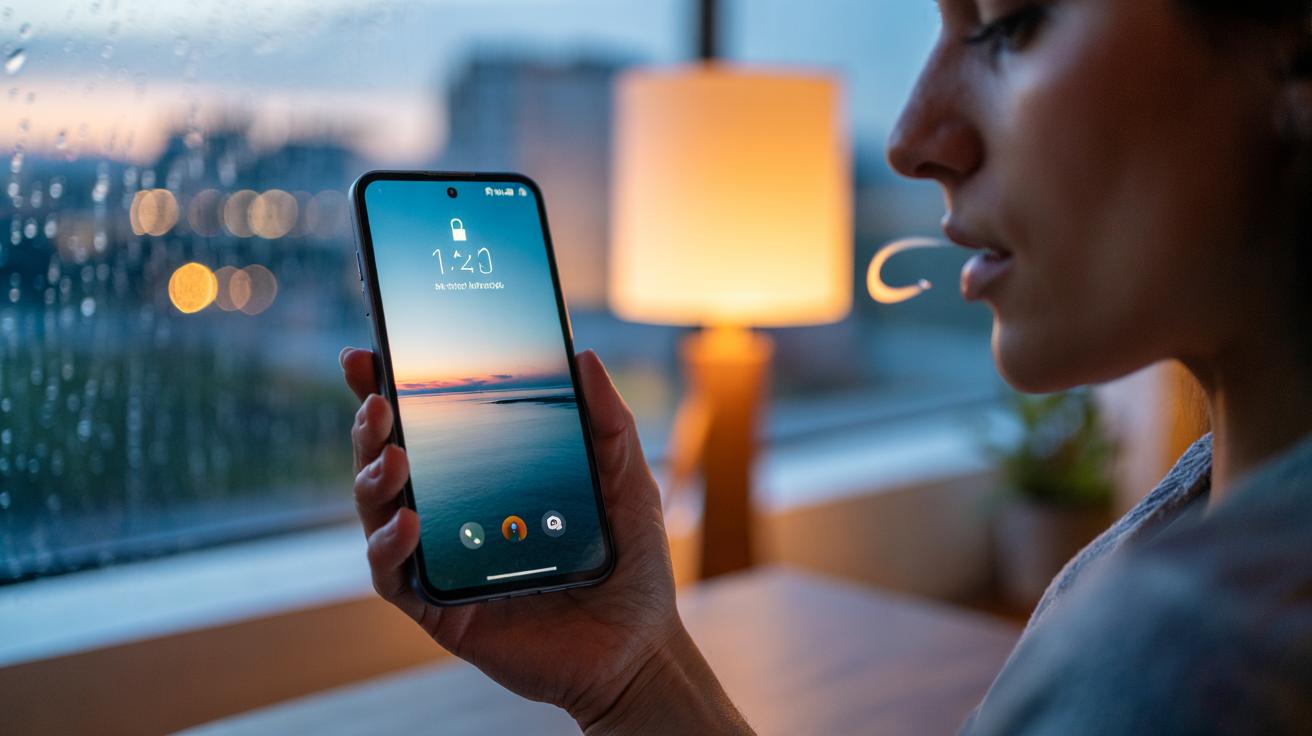
Unlock. Glance. Scroll. Repeat. For most of us, the phone’s home screen is simply a launchpad to everything else. But there’s a small, science-backed tweak that can turn it into a daily calm button. Swap the wallpaper for a carefully chosen image and pair it with a tiny breath ritual. Your brain learns the link. Stress drops a notch before emails even open. It sounds almost too simple. Yet this is exactly why it works. Change the cue, change the state. In a world of noise, the quietest intervention is often the most sustainable—and you’ll see it every time you tap to wake.
Why a Picture on Your Phone Can Change Your Physiology
Your nervous system is exquisitely cue-driven. Show it the right image and it will begin to prepare the body accordingly. That’s because attentional priming steers what you notice next, shaping perception before you’re aware of it. A calm visual—the pale horizon at dawn, a soft-textured close-up, a moment of still water—nudges the brain toward parasympathetic activity. Heart rate steadies. Shoulders loosen. Not magic. Conditioning.
Every unlock is a micro-moment where state can be redirected. Think of the home screen as a billboard your brain sees hundreds of times a day. Pair the image with a slow exhale and you create a cue–response loop. Over a week, the brain starts doing the heavy lifting for you, predicting calm on sight. There’s a second mechanism at play too: affect labelling. When you mentally name the image—“quiet shore” or “safe room”—you reduce amygdala reactivity more quickly, giving your frontal cortex a firmer grip on the wheel.
Importantly, this is not a cure-all for anxiety. It’s a nudge, a frictionless micro-intervention that rides the existing habit of checking your phone. Simple beats heroic. Especially on Thursdays at 4 p.m. when willpower is shot.
How to Choose and Train a Calming Homescreen
Start with images that evoke safety, not thrill. Gentle gradients. Soft edges. A place you know well. Avoid faces looking straight at you; gaze direction captures attention and can feel demanding. Nature helps—especially fractals like ferns, shells, clouds—because their patterns are complex enough to engage, not so busy that they agitate. Cool colour temperatures often read as calmer than hot tones, though your personal history trumps any rule.
Test candidates. Spend ten seconds with each and rate your felt sense of ease from 1–10. Pick the top two. Then train the association. For the next five days, every unlock gets a 4-second inhale, 6-second exhale while looking at one anchor point in the image. Whisper a simple label: “Still.” Or “Home.” That’s implementation intention in action—“When I unlock, I exhale and soften my jaw.” Don’t overcomplicate it. A consistent, repeatable script builds the neural link faster than variety.
Watch for derailing details. App icons and red badges are visual sirens. Consider a minimalist layout or a focus mode that hides badges on the home page. Give your calming image space to breathe—one dock row, tops. If your screen shouts, your nervous system listens. The goal is a gentle pattern interrupt before the dopamine chase begins.
The 30-Second Routine That Makes It Stick
Here’s a pragmatic run-through you can practise anywhere, including the Northern line at rush hour. Step one: unlock and pause for one beat before moving your thumb. Step two: rest your gaze lightly on a single feature in the image—ridge line, curve, shadow. Step three: breathe in for four, out for six, once. Step four: whisper your label silently, then soften tongue and jaw. Done. Thirty seconds is long enough to lower arousal, short enough to use every time.
Layer in a weekly reset. On Sundays, review whether your image still works. Habituation dulls effect; swap every two to three weeks to refresh salience. Consider a themed rotation anchored to your week: Monday woods, midweek sea, Friday cosy interiors. If you’re a data-minded type, track perceived calm on a 1–5 scale for seven days. The point isn’t perfection. It’s consistency.
| Image Type | Why It Calms | What to Avoid |
|---|---|---|
| Nature scene (horizon, water) | Soft depth cues, low visual noise, predictive safety | Storms, harsh contrast, crowded beaches |
| Loved-one candid | Attachment cues, oxytocin-linked warmth | Direct gaze selfies, emotionally charged events |
| Texture/macro (wood grain, linen) | Fractals and gentle detail engage without demand | Sharp edges, metallic glare, busy patterns |
| Minimal gradient | Fast processing, no decision load | Neon brights, clashing colours |
Evidence, Limits, and When Not to Use It
The method leans on sturdy principles. Attentional control research shows that directing focus towards low-threat cues reduces anxious biasing. Slow exhalation lengthens vagal tone, which supports a calmer baseline. And cue-based habits—via if–then plans—are consistently more reliable than relying on motivation alone. In plain English: teach your brain what this picture means, then let it do the remembering.
There are limits. If your stressor is acute—grief, a crisis at work—this is a stabiliser, not a solution. Seek proper support. Avoid images that could be socially sensitive on a train or in a meeting; your home screen is, at times, public. Also consider privacy: skip children’s faces or identifiable locations if you regularly hand over your phone. On iPhone, set via Settings > Wallpaper; on Android, long-press home screen and choose Wallpaper & style. Friction kills habits, so make the swap effortless.
Finally, be kind to yourself. Some days you’ll forget. Others you’ll tap and breathe without thinking. That’s progress. The nervous system loves patience, repetition, and clarity. This tiny change delivers all three.
In a culture that tells us to “do more to feel better,” this trick flips the script: feel better so you can do more. A single image becomes a pocket-sized sanctuary you visit dozens of times a day, each visit a nudge towards steadier focus and softer shoulders. Swap the wallpaper, train the breath, label the state, and let the association work while you get on with life. What picture will you choose to greet your future self every time you unlock?
Did you like it?4.3/5 (24)